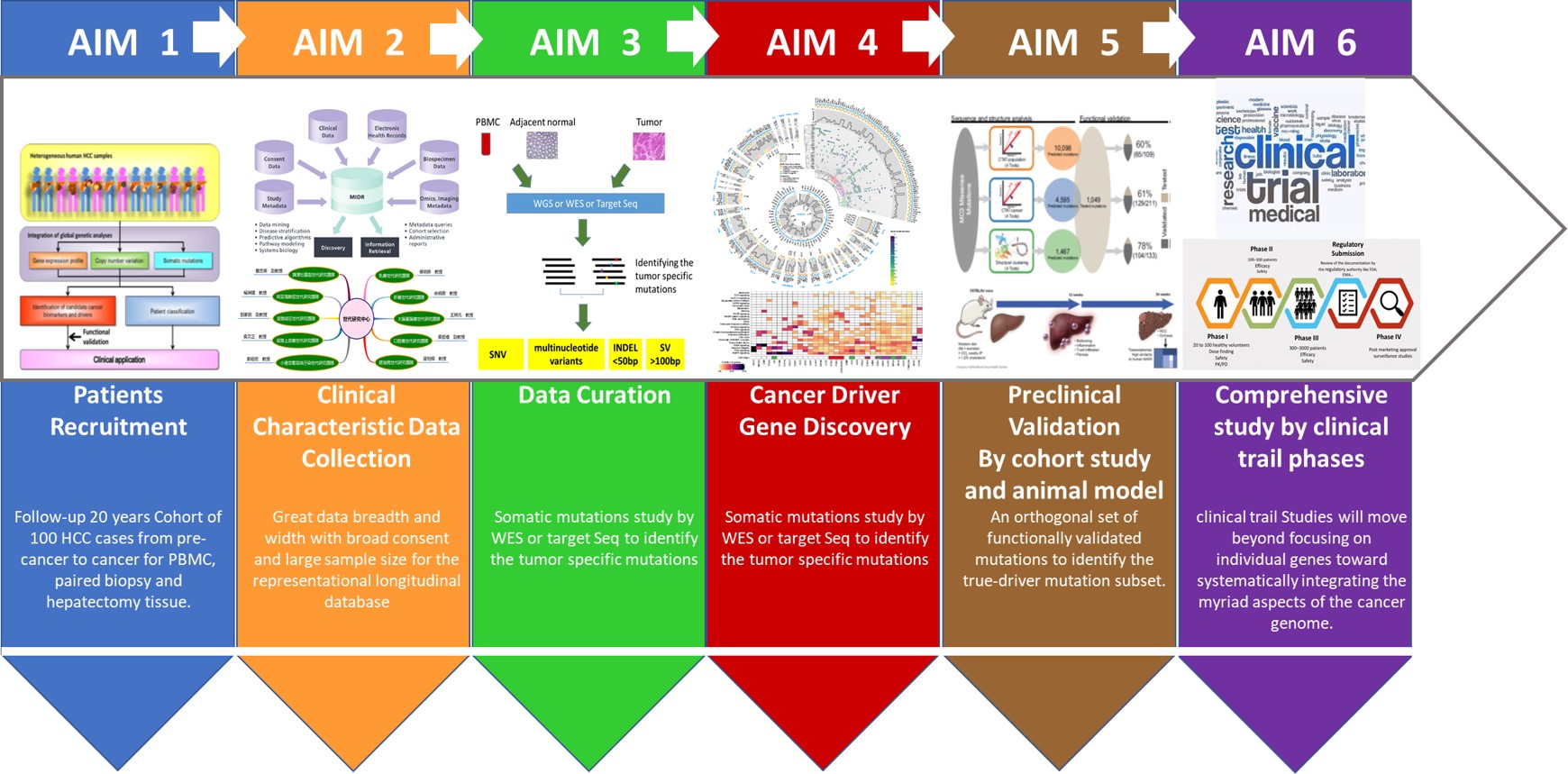
可能性的生物因子參與在慢性肝炎誘發肝癌之機制:
Potential biological factors involved in the mechanism of hepatocellular carcinoma
1. 建立脂肪肝小鼠模式,從發炎誘導肝纖維化甚或是肝癌其可能參與之癌前病變機制之
探討。The MASLD mouse models to explore the possible precancerous lesion
mechanism of liver fibrosis or even hepatocellular carcinoma.
2. 開發液態生物檢體-Exosomes檢測因子,以此監控和預測疾病開發液態檢測之精準醫
療策略。Utilization of liquid biological specimens for disease monitoring, prediction,
and the development of precision medicine strategies.
3. HCV 細胞內不同病毒量其和癌症相關基因表現之探討。
Different viral loads in HCV cells and the expression of cancer-related genes.
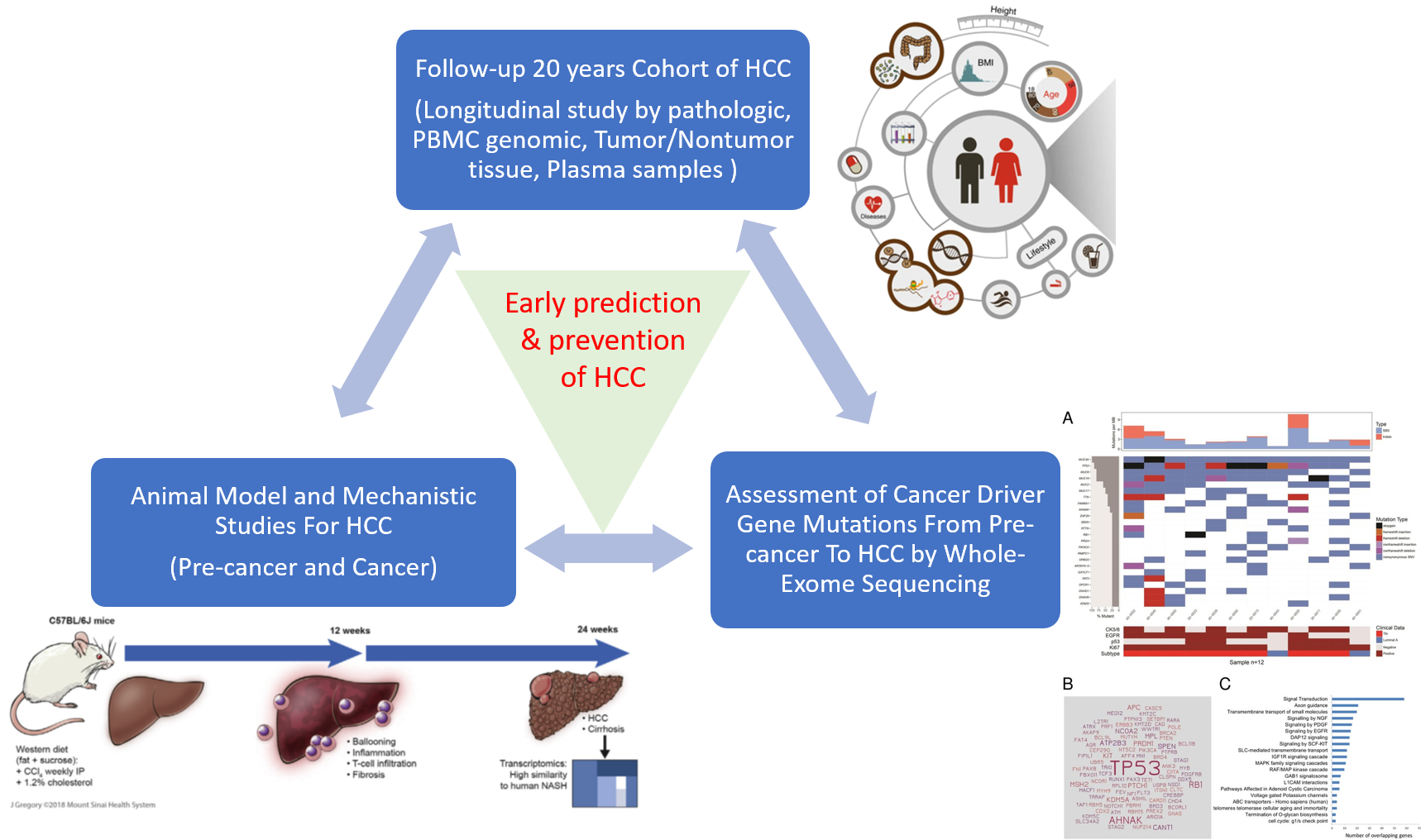
大數據分析到作用機制之探討:
Big Data Analysis and Mechanism of Action:
1. 肥胖相關代謝性脂肪演變肝癌會有較差的預後以及突變基因的表現。
Obesity-related MASLD-derived hepatocellular carcinoma is associated with poorer
prognosis and susceptibility gene variants.
2. 基因和微小RNA表現在長期低濃度潛伏C型肝炎病毒感染和癌發及預後之相關機制。
mRNA and miRNA networks in long-term low hepatitis C virus loads and cancer
development and prognosis.
3. 多體學研究巨噬細胞在腫瘤轉移中蛋白調控之相關探討。
Multi-omics studies exploring protein regulation of macrophages in tumor metastasis.
4. Corylin調控活化腦內巨噬細胞-Microgila之NLRP3 inflammasome。
Corylin regulates NLRP3 inflammasome activation in brain microglia.
5. 修復蛋白磷酸化和細胞週期及其DNA雙股斷裂修復之調控機制。
Repair protein phosphorylation, cell cycle, and DNA double-strand break repair.